
Publication Order of Berlin Stories Books
| Mr Norris Changes Trains / The Last of Mr Norris | 1935 |
| Sally Bowles | 1937 |
| Goodbye to Berlin | 1939 |
Publication Order of Standalone Novels
| All the Conspirators | 1928 |
| The Memorial | 1932 |
| Prater Violet | 1945 |
| The World in the Evening | 1954 |
| Down There on a Visit | 1962 |
| A Single Man | 1964 |
| A Meeting by the River | 1967 |
Publication Order of Short Stories/Novellas
| Jacob’s Hands: A Fable (With: Aldous Huxley) | 1998 |
Publication Order of Short Story Collections
| Exhumations | 1966 |
| The Mortmere Stories (With: Edward Upward) | 1994 |
Publication Order of Plays
| The Dog Beneath the Skin (With: W. H. Auden) | 1935 |
| The Ascent of F6 (With: W. H. Auden) | 1936 |
| On the Frontier (With: W. H. Auden) | 1938 |
Publication Order of Non-Fiction Books
| Lions and Shadows | 1938 |
| Journey to a War (With: W. H. Auden) | 1939 |
| The Condor and the Cows | 1949 |
| An Approach to Vedanta | 1963 |
| Ramakrishna and His Disciples | 1965 |
| Kathleen and Frank | 1971 |
| Christopher and His Kind | 1976 |
| My Guru and His Disciple | 1980 |
| October (With: Don Bachardy) | 1980 |
| The Wishing Tree | 1987 |
| Diaries: Volume One, 1939-1960 | 1996 |
| Lost Years: A Memoir 1945-1951 | 2000 |
| Kathleen and Christopher: Christopher Isherwood’s Letters to His Mother | 2005 |
| Isherwood on Writing | 2007 |
| The Sixties: Diaries 1960-1969 | 2010 |
| Liberation: Diaries 1970-1983 | 2012 |
| The Animals: Love Letters Between Christopher Isherwood and Don Bachardy (With: Don Bachardy) | 2013 |
About Christopher Isherwood
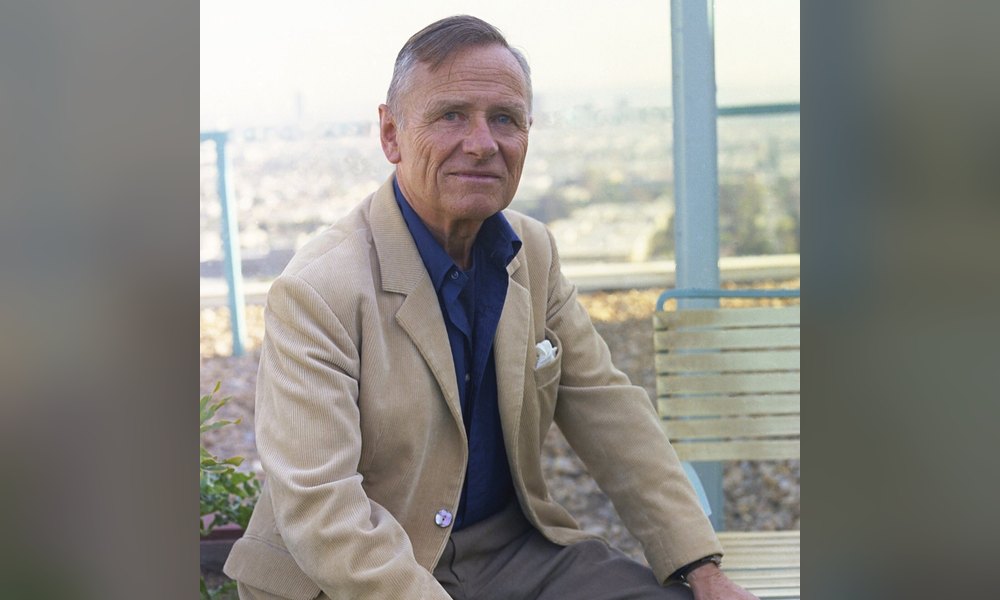
Christopher Isherwood (1904 to 1986) was an English-born novelist, playwright and diarist who became an American citizen in 1946. He is best known for “Goodbye to Berlin” (1939), the semi-autobiographical novel that became the musical “Cabaret”, and for “A Single Man” (1964).
Isherwood was born on his family’s estate in Cheshire. His father, a professional soldier, was killed in the First World War in 1915. At prep school he met W. H. Auden, and at Repton he met Edward Upward, with whom he invented the imaginary village of Mortmere. He went up to Corpus Christi College, Cambridge, but was asked to leave without a degree in 1925 after writing jokes and limericks in an exam. His first novel, “All the Conspirators”, was published in 1928.
In 1929 he followed Auden to Berlin and settled there. He finished “The Memorial” (1932), about the effect of the First World War on his family and generation, and kept the diary that supplied “Mr Norris Changes Trains” (1935) and “Goodbye to Berlin”, a portrait of the city as Hitler rose to power. The latter includes the novella “Sally Bowles” (1937), whose heroine was based on Jean Ross, an Englishwoman with whom he briefly shared a flat. The two Berlin novels were issued together in the United States as “The Berlin Stories” in 1945. John van Druten adapted “Goodbye to Berlin” for the stage as “I Am a Camera” (1951), which led to the Broadway musical “Cabaret” (1966) and the 1972 film.
During the 1930s Isherwood wrote three plays with Auden, and their journey to China in 1938 produced “Journey to a War” (1939). Both men emigrated to the United States in January 1939. Isherwood settled in California, became a follower of Vedanta under Swami Prabhavananda and worked with him on a translation of the Bhagavad Gita (1944). In the early 1950s he met the artist Don Bachardy, his partner for the rest of his life.
His American novels include “Prater Violet” (1945), drawn from his work in film, and “A Single Man”, which covers one day in the life of George, a middle-aged English professor in Los Angeles; Tom Ford filmed it in 2009. The memoir “Christopher and His Kind” (1976) returned to his Berlin years and was adapted by the BBC in 2010 with Matt Smith as Isherwood. He died of prostate cancer at home in Santa Monica on 4 January 1986. His diaries, edited by Katherine Bucknell, appeared in four volumes between 1996 and 2012.
Photo: Allan Warren, CC BY-SA 3.0, via Wikimedia Commons (cropped).