
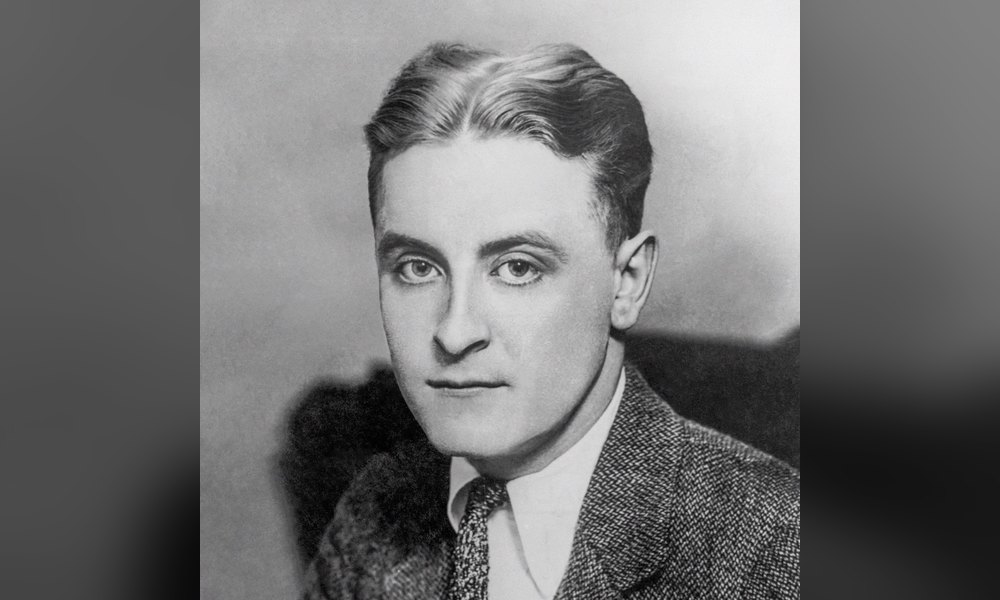
F. Scott Fitzgerald (24 September 1896 to 21 December 1940) was an American novelist and short story writer best known for “The Great Gatsby” and for his portrayal of the Jazz Age, a term he popularised with the collection “Tales of the Jazz Age”. He published four novels and four story collections in his lifetime, and a fifth, unfinished novel appeared after his death.
Fitzgerald was born into a middle-class family in Saint Paul, Minnesota, and was raised mainly in New York state. He attended Princeton University, where he befriended the future critic Edmund Wilson, and left without a degree in 1917 to join the Army. While stationed in Alabama he met Zelda Sayre. She at first turned down his proposal because of his lack of financial prospects, and agreed to marry him after the commercial success of his first novel, “This Side of Paradise” (1920).
“The Beautiful and Damned” followed in 1922. To support an affluent lifestyle he wrote stories for magazines such as The Saturday Evening Post, Collier’s Weekly and Esquire, and he spent long periods in Europe, where he became friends with Ernest Hemingway. “The Great Gatsby” (1925) received generally favourable reviews but was a commercial failure, selling fewer than 23,000 copies in its first year. His last completed novel, “Tender Is the Night” (1934), was finished after Zelda’s mental health had deteriorated and she had been placed in an institution.
With his work falling out of favour during the Great Depression, Fitzgerald moved to Hollywood, where his career as a screenwriter was unsuccessful. He died of a heart attack in 1940, aged 44. Edmund Wilson edited the unfinished “The Last Tycoon” for publication in 1941. Later posthumous volumes include “The Pat Hobby Stories” (1962), which gathers the 17 stories about a fictional screenwriter, and “I’d Die for You” (2017), a collection of rediscovered stories.
Nearly all of his novels have been filmed. “The Great Gatsby” has been adapted many times, including the 1974 film with Robert Redford and Baz Luhrmann’s 2013 version with Leonardo DiCaprio. “The Last Tycoon” became a 1976 film and a 2016 Amazon television series, and his short story “The Curious Case of Benjamin Button” was the basis of the 2008 film.
Publication Order of Standalone Novels
| This Side of Paradise | 1920 |
| The Beautiful and Damned | 1922 |
| The Great Gatsby | 1925 |
| Tender Is the Night | 1934 |
| The Last Tycoon / The Love of the Last Tycoon | 1941 |
Publication Order of Short Story Collections
| Flappers and Philosophers | 1920 |
| Tales of the Jazz Age | 1922 |
| All the Sad Young Men | 1926 |
| Taps at Reveille | 1935 |
| The Stories of F. Scott Fitzgerald | 1951 |
| Afternoon of an Author | 1958 |
| Babylon Revisited and Other Stories | 1960 |
| The Pat Hobby Stories | 1962 |
| The Apprentice Fiction of F. Scott Fitzgerald | 1965 |
| The Basil and Josephine Stories | 1973 |
| Bits of Paradise (With: Zelda Fitzgerald) | 1974 |
| The Price Was High | 1979 |
| The Short Stories of F. Scott Fitzgerald | 1989 |
| I’d Die for You: And Other Lost Stories | 2017 |
Publication Order of Plays
| The Vegetable | 1923 |
Publication Order of Poetry Collections
| Poems 1911-1940 | 1981 |
Publication Order of Non-Fiction Books
| The Crack-Up | 1945 |
| The Letters of F. Scott Fitzgerald | 1964 |
| Dear Scott/Dear Max | 1971 |
| As Ever, Scott Fitz | 1972 |
| Correspondence of F. Scott Fitzgerald | 1980 |
| F. Scott Fitzgerald: A Life in Letters | 1994 |
| My Lost City: Personal Essays, 1920-1940 | 2005 |
Photo: Photographer unknown; Scribner’s publicity photograph, first published in The World’s Work, June 1921, Public domain, via Wikimedia Commons (cropped).