Publication Order of The Head of the House of Coombe Books
The Head of the House of Coombe
1922
Robin
1922
Publication Order of Standalone Novels
That Lass o’ Lowrie’s
1877
Theo: A Sprightly Love Story
1877
Pretty Polly Pemberton
1877
Kathleen: A Love Story
1878
Lindsay’s Luck
1878
Miss Crespigny
1878
Haworth’s
1879
Louisiana
1880
A Fair Barbarian
1881
Through One Administration
1883
Vagabondia: A Love Story
1884
The Fortunes of Philippa Fairfax
1888
The Pretty Sister of José
1889
In Connection with the De Willoughby Claim
1899
In the Closed Room
1904
The Dawn of a To-morrow
1906
The Shuttle
1907
T. Tembarom
1913
The White People
1917
Publication Order of Children’s Books
Little Lord Fauntleroy
1886
Sara Crewe; or, What Happened at Miss Minchin’s
1888
Editha’s Burglar
1888
Little Saint Elizabeth and Other Stories
1890
Giovanni and the Other / Children I Have Known
1892
Piccino and Other Child Stories
1894
Two Little Pilgrims’ Progress
1895
The Land of the Blue Flower
1904
A Little Princess
1905
The Good Wolf
1908
Barty Crusoe and His Man Saturday
1909
The Secret Garden
1911
The Lost Prince
1915
The Little Hunchback Zia
1916
Publication Order of Short Story Collections
Surly Tim and Other Stories
1877
Natalie and Other Stories
1879
Publication Order of Non-Fiction Books
The Drury Lane Boys’ Club
1892
The One I Knew the Best of All: A Memory of the Mind of a Child
1893
My Robin
1912
In the Garden
1925
About Frances Hodgson Burnett
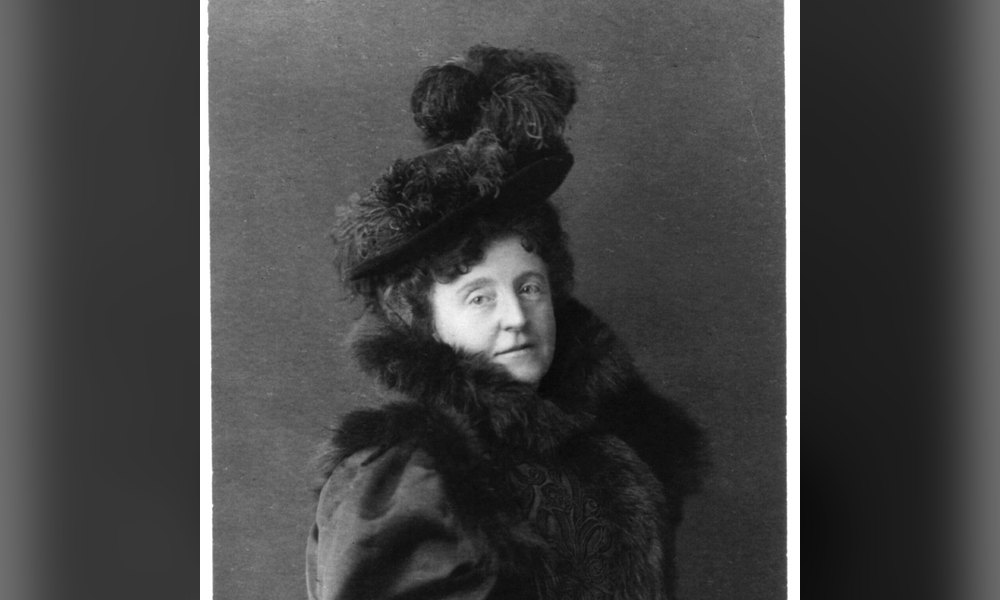
Frances Hodgson Burnett (1849 to 1924) was a British-American novelist and playwright, born in Manchester and settled for most of her life in the United States. She is best known for three children’s novels: “Little Lord Fauntleroy” (1886), “A Little Princess” (1905) and “The Secret Garden” (1911). She also wrote a long list of novels for adults, several of which were bestsellers in their day.
She was born Frances Eliza Hodgson in Cheetham, Manchester, on 24 November 1849, the third of five children of an ironmonger who died in 1853. The family’s business failed during the Lancashire cotton famine, and in 1865 they emigrated to join an uncle near Knoxville, Tennessee. To earn money she began sending stories to magazines, and her first was published in “Godey’s Lady’s Book” in 1868. In 1873 she married Swan Burnett, who became a doctor, and they had two sons, Lionel and Vivian.
Her first full-length novel, “That Lass o’ Lowrie’s” (1877), set in Lancashire, was well reviewed, and others followed after the family moved to Washington, D.C., among them “Haworth’s”, “Louisiana” and “Through One Administration”. “Little Lord Fauntleroy” was serialised in “St. Nicholas” magazine from 1885. Its hero, modelled on her son Vivian, started a fashion for velvet suits and lace collars, and her own stage version earned as much as the book. A lawsuit she won in 1888 over the dramatic rights set a precedent in British copyright law.
From 1887 she travelled to England almost every year. Lionel died of tuberculosis in 1890. She divorced Swan Burnett in 1898, and a second marriage, to Stephen Townesend in 1900, ended in 1902. During these years she lived at Great Maytham Hall in England, whose walled rose garden gave her the idea for “The Secret Garden”. Her adult fiction of the period includes the historical novel “A Lady of Quality”, “The Making of a Marchioness” and “The Shuttle”, about marriages between American heiresses and English aristocrats.
“A Little Princess” grew out of the novella “Sara Crewe” (1888), which she first turned into a play and then expanded. She became an American citizen in 1905 and from 1907 lived at Plandome Manor on Long Island, where she died on 29 October 1924. Her last novels were “The Head of the House of Coombe” and its sequel “Robin”, both published in 1922. A memorial fountain showing Mary and Dickon from “The Secret Garden” stands in Central Park’s Conservatory Garden.