
Publication Order of Standalone Novels
| Uncle Tom’s Cabin | 1852 |
| Dred: A Tale of the Great Dismal Swamp | 1856 |
| The Minister’s Wooing | 1859 |
| The Pearl of Orr’s Island | 1862 |
| Agnes of Sorrento | 1862 |
| Oldtown Folks | 1869 |
| Pink and White Tyranny | 1871 |
| My Wife and I | 1871 |
| Six of One by Half a Dozen of the Other (With: Adeline D. T. Whitney, Lucretia P. Hale, Frederic W. Loring, Frederic B. Perkins, Edward E. Hale) | 1872 |
| We and Our Neighbors | 1875 |
| Poganuc People | 1878 |
Publication Order of Short Story Collections
| The Mayflower | 1843 |
| Uncle Sam’s Emancipation; Earthly Care, a Heavenly Discipline; and Other Sketches | 1853 |
| Oldtown Fireside Stories | 1872 |
| Betty’s Bright Idea | 1876 |
Publication Order of Children’s Books
| Our Charley and What to Do with Him | 1858 |
| Stories About Our Dogs | 1865 |
| Queer Little People | 1868 |
| Little Pussy Willow | 1870 |
| A Dog’s Mission | 1880 |
Publication Order of Non-Fiction Books
| A Key to Uncle Tom’s Cabin | 1853 |
| Sunny Memories of Foreign Lands | 1854 |
| First Geography for Children | 1855 |
| House and Home Papers | 1865 |
| Little Foxes | 1866 |
| Men of Our Times | 1868 |
| The Chimney Corner | 1868 |
| The American Woman’s Home (With: Catharine Beecher) | 1869 |
| Lady Byron Vindicated | 1870 |
| The Lives and Deeds of Our Self-Made Men | 1872 |
| Palmetto Leaves | 1873 |
| Woman in Sacred History | 1873 |
| Footsteps of the Master | 1877 |
| Bible Heroines | 1878 |
About Harriet Beecher Stowe
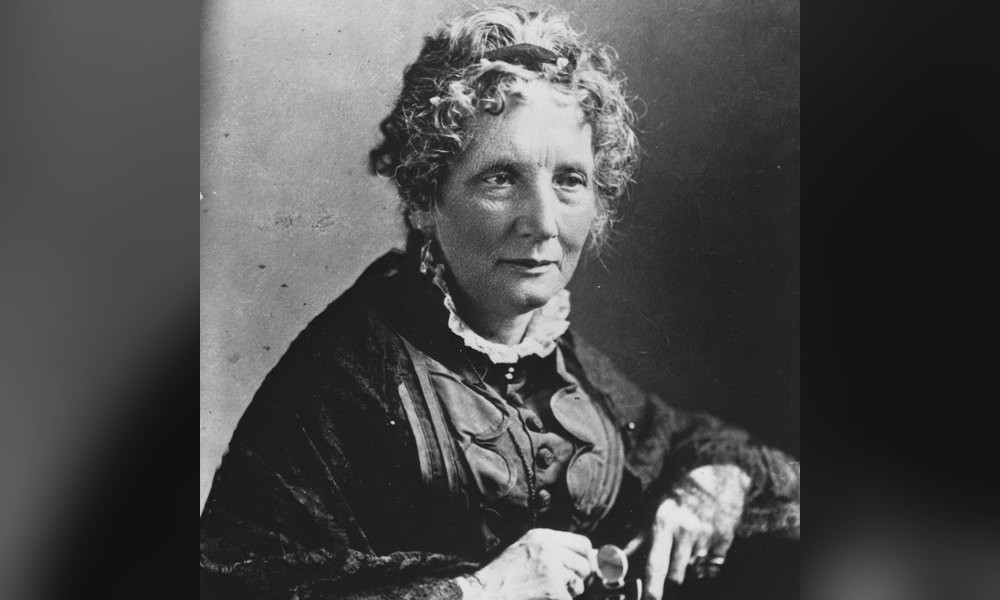
Harriet Beecher Stowe (1811 to 1896) was an American author and abolitionist, best known for the anti-slavery novel “Uncle Tom’s Cabin” (1852). She wrote more than 30 books, including novels, travel memoirs and collections of articles and letters.
She was born Harriet Elisabeth Beecher in Litchfield, Connecticut, the sixth of eleven children of the Calvinist preacher Lyman Beecher. Her siblings included the educator Catharine Beecher and the preacher Henry Ward Beecher. She was educated at the Hartford Female Seminary, which her sister Catharine ran, and in 1832 moved to Cincinnati, Ohio, where her father had become president of Lane Theological Seminary. There she met African Americans who had suffered in the city’s riots, and attended the seminary’s debates on slavery. In 1836 she married Calvin Ellis Stowe, a professor at the seminary, and they had seven children. Her first collection of sketches, “The Mayflower”, appeared in 1843.
By 1850, when Congress passed the Fugitive Slave Act, the family was living in Brunswick, Maine, where Calvin taught at Bowdoin College. “Uncle Tom’s Cabin” was serialised in the anti-slavery newspaper The National Era from June 1851 to April 1852, and was published as a book in two volumes in March 1852. It sold 300,000 copies in less than a year and was quickly adapted for the stage. She followed it with “A Key to Uncle Tom’s Cabin” (1853), presenting the facts and documents on which the story was founded, and a second novel, “Dred”, in 1856. She met President Abraham Lincoln in Washington in November 1862.
Her later fiction includes “The Minister’s Wooing” (1859), “The Pearl of Orr’s Island” (1862), “Agnes of Sorrento” (1862), “Oldtown Folks” (1869) and “Poganuc People” (1878). “My Wife and I” (1871) has a sequel in “We and Our Neighbors” (1875). She contributed articles and stories to The Atlantic Monthly, and published three books under the pen name Christopher Crowfield, beginning with “House and Home Papers” (1865). With her sister Catharine she wrote “The American Woman’s Home” (1869).
An 1869 article in The Atlantic alleging that Lord Byron had an affair with his half-sister damaged her popularity in England; she expanded the case in “Lady Byron Vindicated” (1870). After the Civil War she bought property at Mandarin, Florida, and “Palmetto Leaves” followed in 1873. Her health declined after her husband’s death in 1886. She died in Hartford, Connecticut, on 1 July 1896.
Photo: Public domain, Public domain, via Wikimedia Commons (cropped).