
Publication Order of Standalone Novels
| Go Tell It on the Mountain | 1953 |
| Giovanni’s Room | 1956 |
| Another Country | 1962 |
| Tell Me How Long the Train’s Been Gone | 1968 |
| If Beale Street Could Talk | 1974 |
| Just Above My Head | 1979 |
Publication Order of Short Story Collections
| Going to Meet the Man | 1965 |
Publication Order of Children’s Books
| Little Man, Little Man: A Story of Childhood | 1976 |
Publication Order of Plays
| The Amen Corner | 1954 |
| Blues for Mister Charlie | 1964 |
Publication Order of Poetry Collections
| Jimmy’s Blues | 1983 |
Publication Order of Non-Fiction Books
| Notes of a Native Son | 1955 |
| Nobody Knows My Name | 1961 |
| The Fire Next Time | 1963 |
| Nothing Personal (With: Richard Avedon) | 1964 |
| A Rap on Race (With: Margaret Mead) | 1971 |
| No Name in the Street | 1972 |
| A Dialogue (With: Nikki Giovanni) | 1973 |
| The Devil Finds Work | 1976 |
| The Evidence of Things Not Seen | 1985 |
| The Price of the Ticket | 1985 |
| Native Sons (With: Sol Stein) | 2004 |
| The Cross of Redemption | 2010 |
About James Baldwin
James Baldwin (1924 to 1987) was an American novelist, essayist and playwright whose work deals with race, sexuality and class in mid-twentieth-century America. He is best known for the novels “Go Tell It on the Mountain” (1953) and “Giovanni’s Room” (1956) and for the essay collections “Notes of a Native Son” and “The Fire Next Time”.
Baldwin was born in Harlem, New York City, on 2 August 1924. His mother, Emma Berdis Jones, married David Baldwin, a labourer and Baptist preacher, in 1927, and James took his stepfather’s surname. He was the eldest of nine children. In November 1948, aged 24 and disillusioned by American prejudice against Black people, he moved to Paris with forty dollars to his name.
“Go Tell It on the Mountain”, a semi-autobiographical novel, was published in May 1953, and “Time” magazine has ranked it among the top 100 English-language novels. “Notes of a Native Son” (1955) established him as an essayist. “Giovanni’s Room” tells of David, a man in Paris with a fiancée in Spain, and his relationship with Giovanni, whom he meets in a bar. His third and fourth novels, “Another Country” (1962) and “Tell Me How Long the Train’s Been Gone” (1968), have Black and white, gay and straight characters.
“The Fire Next Time” (1963), built around a long essay first published in “The New Yorker”, put Baldwin on the cover of “Time” and made him a prominent spokesman for the civil rights movement. “No Name in the Street” (1972) reflects on the assassinations of his friends Medgar Evers, Malcolm X and Martin Luther King Jr. He also wrote the plays “The Amen Corner” and “Blues for Mister Charlie” and a story collection, “Going to Meet the Man” (1965).
From 1970 Baldwin lived in Saint-Paul-de-Vence in the south of France, where he wrote his last novels, “If Beale Street Could Talk” (1974) and “Just Above My Head” (1979). He was made a Commandeur de la Légion d’honneur in 1986 and died of stomach cancer on 1 December 1987. His unfinished memoir “Remember This House” was the basis of the 2016 documentary “I Am Not Your Negro”, and “If Beale Street Could Talk” was filmed in 2018.
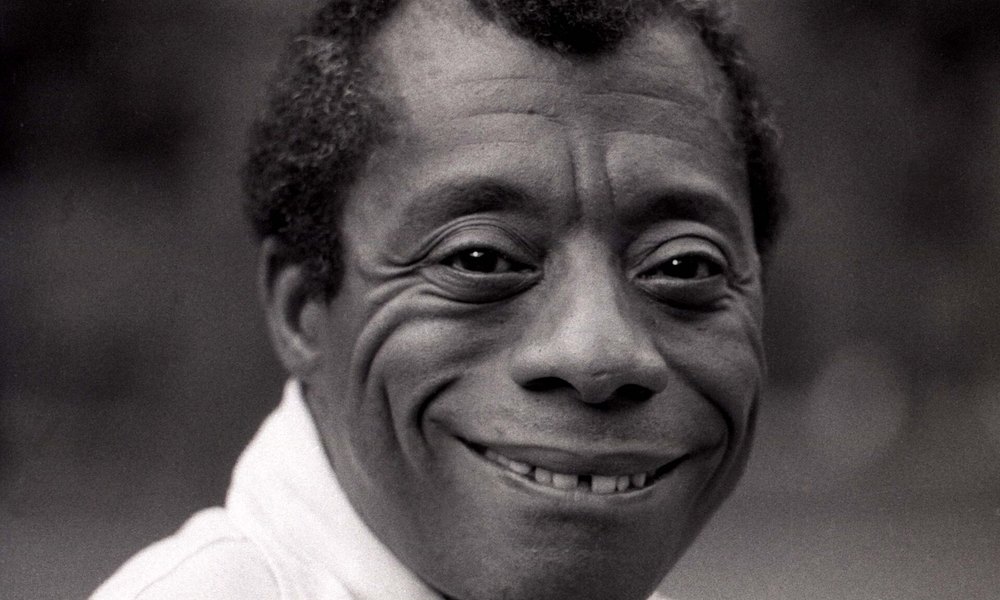
Photo: Allan Warren, CC BY-SA 3.0, via Wikimedia Commons (cropped).