
Publication Order of Green Town Books
| Dandelion Wine | 1957 |
| Something Wicked This Way Comes | 1962 |
| Farewell Summer | 2006 |
Publication Order of Crumley Mysteries Books
| Death Is a Lonely Business | 1985 |
| A Graveyard for Lunatics | 1990 |
| Let’s All Kill Constance | 2002 |
Publication Order of Standalone Novels
| The Martian Chronicles | 1950 |
| Fahrenheit 451 | 1953 |
| The Halloween Tree | 1972 |
| Green Shadows, White Whale | 1992 |
| From the Dust Returned | 2001 |
Publication Order of Short Story Collections
| Dark Carnival | 1947 |
| The Illustrated Man | 1951 |
| The Golden Apples of the Sun | 1953 |
| The October Country | 1955 |
| A Medicine for Melancholy / The Day It Rained Forever | 1959 |
| The Small Assassin | 1962 |
| R Is for Rocket | 1962 |
| The Machineries of Joy | 1964 |
| The Vintage Bradbury | 1965 |
| S Is for Space | 1966 |
| I Sing the Body Electric | 1969 |
| Long After Midnight | 1976 |
| The Stories of Ray Bradbury | 1980 |
| Dinosaur Tales | 1983 |
| A Memory of Murder | 1984 |
| The Toynbee Convector | 1988 |
| Quicker Than the Eye | 1996 |
| Driving Blind | 1997 |
| One More for the Road | 2002 |
| Bradbury Stories: 100 of His Most Celebrated Tales | 2003 |
| The Cat’s Pajamas | 2004 |
| Now and Forever: Somewhere a Band Is Playing & Leviathan ’99 | 2007 |
| Summer Morning, Summer Night | 2007 |
| We’ll Always Have Paris | 2009 |
| A Pleasure to Burn | 2010 |
| Killer, Come Back to Me: The Crime Stories of Ray Bradbury | 2020 |
Publication Order of Children’s Books
| Switch on the Night | 1955 |
| With Cat for Comforter | 1997 |
| Dogs Think That Every Day Is Christmas | 1997 |
| Ahmed and the Oblivion Machines | 1998 |
Publication Order of Poetry Collections
| When Elephants Last in the Dooryard Bloomed | 1973 |
| Where Robot Mice and Robot Men Run Round in Robot Towns | 1977 |
| The Haunted Computer and the Android Pope | 1981 |
| The Complete Poems of Ray Bradbury | 1982 |
| They Have Not Seen the Stars | 2001 |
| I Live by the Invisible: New & Selected Poems | 2002 |
Publication Order of Non-Fiction Books
| Zen in the Art of Writing | 1990 |
| Yestermorrow: Obvious Answers to Impossible Futures | 1991 |
| Bradbury Speaks: Too Soon from the Cave, Too Far from the Stars | 2005 |
| Match to Flame: The Fictional Paths to Fahrenheit 451 | 2007 |
About Ray Bradbury
Ray Bradbury (1920 to 2012) was an American author and screenwriter best known for the novel “Fahrenheit 451” and the story collections “The Martian Chronicles”, “The Illustrated Man” and “The October Country”. He wrote fantasy, science fiction, horror, mystery and realistic fiction, and the New York Times described him as the writer most responsible for bringing modern science fiction into the literary mainstream.
Bradbury was born in Waukegan, Illinois, and his family settled in Los Angeles in 1934, when he was 14. He attended Los Angeles High School and began publishing science fiction stories in fanzines in 1938. His first paid piece, “Pendulum”, written with Henry Hasse, appeared in Super Science Stories in 1941, and he was writing full time by the age of 24. His first collection, “Dark Carnival”, was published by the small press Arkham House in 1947.
“The Martian Chronicles” (1950) is a fix-up novel built from loosely connected stories, most of them previously published. “Fahrenheit 451”, his novel of a future in which books are burned, grew out of “The Fireman”, a shorter work printed in Galaxy Science Fiction in 1951. Bradbury wrote the expanded version on rented typewriters in a study room at the UCLA library.
Several of his books are set in Green Town, an imagined version of 1920s Waukegan: “Dandelion Wine”, “Something Wicked This Way Comes” and “Farewell Summer”. He worked on the screenplay of John Huston’s “Moby Dick” (1956), an experience he turned into the semi-fictional “Green Shadows, White Whale”. From 1985 he also published three mystery novels, beginning with “Death Is a Lonely Business”.
Francois Truffaut filmed “Fahrenheit 451” in 1966 with Oskar Werner and Julie Christie, and many of the stories were adapted for television, including in “The Ray Bradbury Theater”. Bradbury won an Emmy in 1994 for his screenplay of “The Halloween Tree”. He received the National Book Foundation’s Medal for Distinguished Contribution to American Letters in 2000, the National Medal of Arts in 2004 and a special citation from the Pulitzer Prize jury in 2007.
Bradbury died in Los Angeles on 5 June 2012, aged 91. Collections published since then include “Killer, Come Back to Me” (2020), which gathers his crime stories.
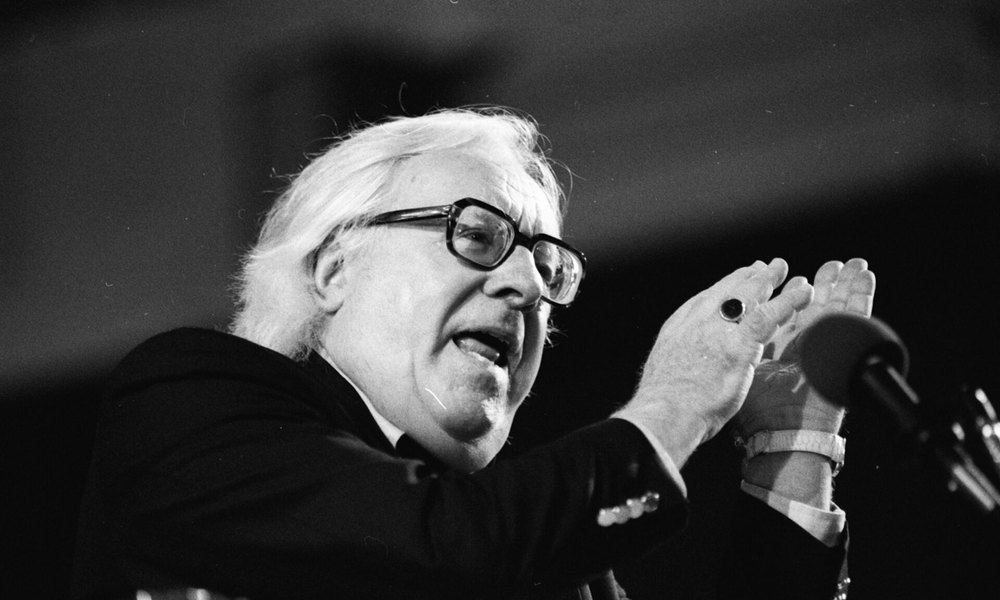
Photo: MDCarchives, CC BY-SA 3.0, via Wikimedia Commons (cropped).