
Publication Order of Standalone Novels
| Hike and the Aeroplane | 1912 |
| Our Mr. Wrenn | 1914 |
| The Trail of the Hawk | 1915 |
| The Job | 1917 |
| The Innocents | 1917 |
| Free Air | 1919 |
| Main Street | 1920 |
| Babbitt | 1922 |
| Arrowsmith | 1925 |
| Mantrap | 1926 |
| Elmer Gantry | 1927 |
| The Man Who Knew Coolidge | 1928 |
| Dodsworth | 1929 |
| Ann Vickers | 1933 |
| Work of Art | 1934 |
| It Can’t Happen Here | 1935 |
| The Prodigal Parents | 1938 |
| Bethel Merriday | 1940 |
| Gideon Planish | 1943 |
| Cass Timberlane | 1945 |
| Kingsblood Royal | 1947 |
| The God-Seeker | 1949 |
| World So Wide | 1951 |
Publication Order of Short Stories/Novellas
| Harri | 1943 |
Publication Order of Short Story Collections
| Selected Short Stories of Sinclair Lewis | 1935 |
| I’m a Stranger Here Myself and Other Stories | 1962 |
| If I Were Boss: The Early Business Stories of Sinclair Lewis | 1997 |
| Go East, Young Man: Sinclair Lewis on Class in America | 2005 |
| The Minnesota Stories of Sinclair Lewis | 2005 |
Publication Order of Non-Fiction Books
| Cheap and Contented Labor | 1929 |
| From Main Street to Stockholm: Letters of Sinclair Lewis, 1919-1930 | 1952 |
| The Man from Main Street: A Sinclair Lewis Reader | 1953 |
| Selected Letters of Sinclair Lewis | 1985 |
| Minnesota Diary, 1942-46 | 2000 |
About Sinclair Lewis
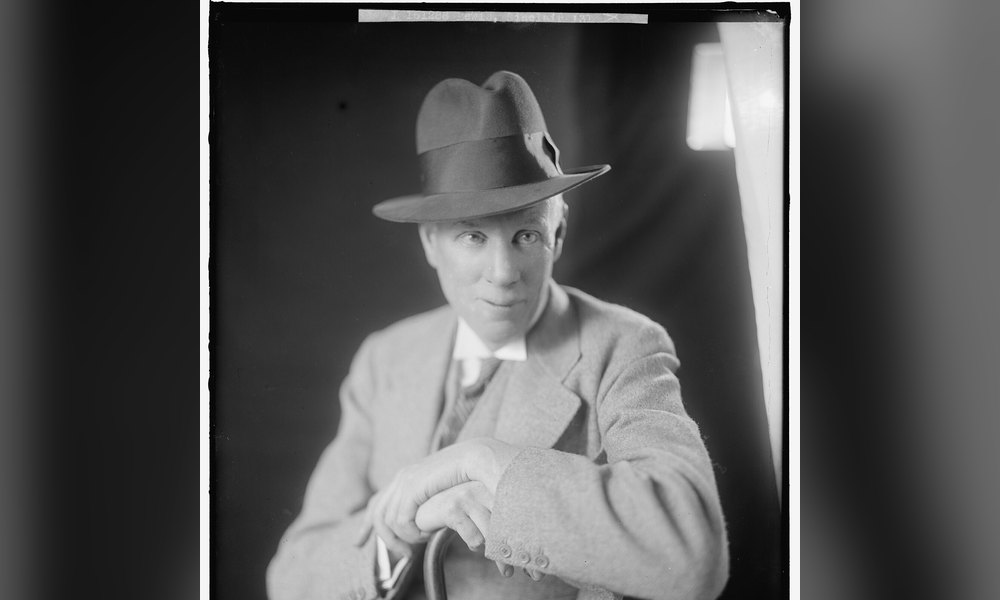
Sinclair Lewis (1885 to 1951) was an American novelist who in 1930 became the first writer from the United States to receive the Nobel Prize in Literature. He is best known for the satirical novels “Main Street” (1920), “Babbitt” (1922), “Arrowsmith” (1925), “Elmer Gantry” (1927) and “Dodsworth” (1929), and for “It Can’t Happen Here” (1935).
Harry Sinclair Lewis was born on 7 February 1885 in Sauk Centre, Minnesota, the son of a physician. He entered Yale in 1903 and received his degree in 1908, having taken time off to work at Upton Sinclair’s Helicon Home Colony in New Jersey and to travel to Panama. After Yale he moved between newspaper and publishing jobs in Iowa, California and New York, selling stories to magazines. His first published book was “Hike and the Aeroplane” (1912), a juvenile adventure issued under the pseudonym Tom Graham, and his first serious novel was “Our Mr. Wrenn” (1914).
“Main Street”, a realistic novel of small-town life published on 23 October 1920, sold 180,000 copies in its first six months. “Babbitt” satirised American commercial culture and boosterism and is set in the fictional Midwestern city of Zenith, to which Lewis returned in later books. “Arrowsmith”, about an idealistic doctor, was awarded the Pulitzer Prize, which Lewis declined. “Elmer Gantry”, with its hypocritical evangelical minister, was denounced by many religious leaders and banned in some American cities.
Several of the novels reached the screen. John Ford directed “Arrowsmith” in 1931, William Wyler filmed “Dodsworth” in 1936, and the 1960 film of “Elmer Gantry” won Burt Lancaster the Academy Award for Best Actor. Walt Disney used the short story “Bongo” in the 1947 feature “Fun and Fancy Free”.
Lewis wrote eleven more novels after the Nobel Prize. “It Can’t Happen Here” imagines the election of a fascist to the American presidency, and “Kingsblood Royal” (1947), set in the fictional city of Grand Republic, Minnesota, draws on a Detroit case in which an African-American doctor was denied the chance to buy a house in a white district. He was married twice, to Grace Livingston Hegger and then to the journalist Dorothy Thompson, and had two sons. He died in Rome on 10 January 1951, and his last novel, “World So Wide”, was published later that year.
Photo: Harris & Ewing / Library of Congress, Public domain, via Wikimedia Commons (cropped).