
Publication Order of Eugene Gant Books
| Look Homeward, Angel | 1929 |
| Of Time and the River | 1935 |
| O Lost: A Story of the Buried Life | 2000 |
Publication Order of George Webber Books
| The Web and the Rock | 1939 |
| You Can’t Go Home Again | 1940 |
Publication Order of Standalone Novels
| The Hound of Darkness | 1986 |
| The Good Child’s River | 1991 |
Publication Order of Short Stories/Novellas
| The Lost Boy | 1937 |
| The Party at Jack’s | 1939 |
| The Starwick Episodes | 1989 |
Publication Order of Short Story Collections
| From Death to Morning | 1935 |
| The Hills Beyond | 1941 |
| The Short Novels of Thomas Wolfe | 1961 |
| The Complete Short Stories of Thomas Wolfe | 1987 |
Publication Order of Plays
| Mannerhouse | 1948 |
| The Mountains | 1970 |
| Welcome to Our City | 1983 |
Publication Order of Non-Fiction Books
| The Story of a Novel | 1936 |
| Thomas Wolfe’s Letters to His Mother | 1943 |
| A Western Journal | 1951 |
| The Letters of Thomas Wolfe | 1956 |
| The Notebooks of Thomas Wolfe | 1970 |
| Beyond Love and Loyalty: The Letters of Thomas Wolfe and Elizabeth Nowell | 1983 |
| My Other Loneliness: Letters of Thomas Wolfe and Aline Bernstein | 1983 |
| To Loot My Life Clean: The Thomas Wolfe-Maxwell Perkins Correspondence | 2000 |
About Thomas Wolfe
Thomas Wolfe (1900 to 1938) was an American novelist from Asheville, North Carolina, best known for his autobiographical first novel, “Look Homeward, Angel” (1929). He wrote four long novels and many short stories before his death at 37, and two of those novels were published only after he died.
Thomas Clayton Wolfe was born on 3 October 1900, the youngest of eight children. His father was a stone carver who ran a gravestone business, and his mother kept a boarding house, where Wolfe lived until he left for the University of North Carolina at the age of fifteen. He graduated in 1920, studied playwriting under George Pierce Baker at Harvard, and took a master’s degree there in 1922. Unable to sell his plays, he began teaching English at New York University in 1924 and turned to fiction.
“Look Homeward, Angel” fictionalised his Asheville childhood as the story of Eugene Gant, renaming the town Altamont. The manuscript, first called “O Lost”, was cut and shaped at Scribner’s by the editor Maxwell Perkins. Its many thinly disguised local characters caused such a stir in Asheville that Wolfe stayed away for eight years. A second Eugene Gant novel, “Of Time and the River” (1935), was carved by Perkins from a far longer manuscript and became Wolfe’s only American bestseller.
Wolfe later left Scribner’s for Harper & Brothers and the editor Edward Aswell. In 1938, after delivering more than a million words of manuscript, he set off on a tour of the western United States, fell ill with pneumonia in Seattle and was diagnosed with miliary tuberculosis. He died at Johns Hopkins Hospital in Baltimore on 15 September 1938.
From the manuscript Aswell edited “The Web and the Rock” (1939) and “You Can’t Go Home Again” (1940), in which the autobiographical hero is renamed George Webber, followed by the collection “The Hills Beyond” (1941). “O Lost”, the uncut text of the first novel, was reconstructed and published in 2000 for the centenary of his birth.
Ketti Frings’s stage adaptation of “Look Homeward, Angel” won the 1958 Pulitzer Prize for Drama, and the 2016 film “Genius” cast Jude Law as Wolfe and Colin Firth as Perkins. The boarding house in Asheville is now the Thomas Wolfe Memorial.
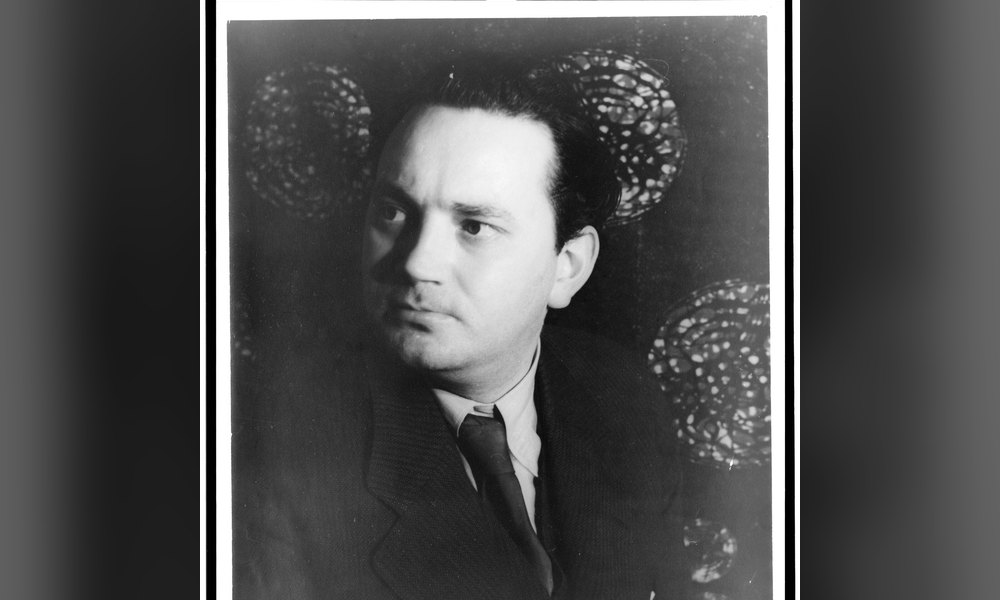
Photo: Carl Van Vechten (Van Vechten Collection, Library of Congress), Public domain, via Wikimedia Commons (cropped).