Publication Order of Standalone Novels
| Mary | 1926 |
| King, Queen, Knave | 1928 |
| The Defense / The Luzhin Defense | 1930 |
| The Eye | 1930 |
| Glory | 1932 |
| Laughter in the Dark / Camera Obscura | 1933 |
| Despair | 1934 |
| Invitation to a Beheading | 1936 |
| The Gift | 1938 |
| The Real Life of Sebastian Knight | 1941 |
| Bend Sinister | 1947 |
| Lolita | 1955 |
| Pnin | 1957 |
| Pale Fire | 1962 |
| Ada or Ardor: A Family Chronicle | 1969 |
| Transparent Things | 1972 |
| Look at the Harlequins! | 1974 |
| The Enchanter | 1986 |
| The Original of Laura | 2009 |
Publication Order of Short Story Collections
| The Return of Chorb | 1930 |
| The Eye | 1938 |
| Nine Stories | 1947 |
| Spring in Fialta and Other Stories | 1956 |
| Nabokov’s Dozen: A Collection of Thirteen Stories | 1958 |
| Nabokov’s Quartet | 1966 |
| A Russian Beauty and Other Stories | 1973 |
| Tyrants Destroyed and Other Stories | 1975 |
| Details of a Sunset and Other Stories | 1976 |
| The Stories of Vladimir Nabokov / The Collected Stories | 1995 |
Publication Order of Non-Fiction Books
| Nikolai Gogol | 1944 |
| Conclusive Evidence: A Memoir / Speak, Memory | 1951 |
| Strong Opinions | 1973 |
| The Nabokov-Wilson Letters | 1979 |
| Lectures on Literature | 1980 |
| Lectures on Ulysses | 1980 |
| Lectures on Russian Literature | 1981 |
| Lectures on Don Quixote | 1983 |
| Selected Letters | 1989 |
| Nabokov’s Butterflies | 2000 |
| Letters to Véra | 2014 |
| Think, Write, Speak: Uncollected Essays, Reviews, Interviews and Letters to the Editor | 2019 |
About Vladimir Nabokov
Vladimir Nabokov (1899 to 1977) was a Russian and American novelist, poet, translator and entomologist, best known for the novels “Lolita” and “Pale Fire” and the memoir “Speak, Memory”. He wrote his first nine novels in Russian under the pen name Vladimir Sirin before switching to English after moving to the United States in 1940.
Nabokov was born in Saint Petersburg into a wealthy family of the Russian nobility. His father was a liberal lawyer, statesman and journalist. The household spoke Russian, English and French, and Nabokov could read and write English before Russian. After the October Revolution the family fled to Crimea and then into exile in western Europe. He studied at Trinity College, Cambridge, taking his BA in 1922, the year his father was shot dead in Berlin while shielding the politician Pavel Milyukov from assassins.
He spent the next fifteen years in Berlin, where he married Véra Slonim in 1925 and published his Russian novels, from “Mary” (1926) to “The Gift” (1938), while giving language, tennis and boxing lessons to supplement his income. The family left Germany for France in 1937 and fled the advancing German army in May 1940, sailing to the United States. Nabokov taught at Wellesley College and, from 1948 to 1959, was a professor of Russian literature at Cornell University. He became a US citizen in 1945.
“Lolita”, written in English during his summer butterfly-collecting trips in the American West, was first published in Paris by Olympia Press in 1955 because of fears of censorship in the United States and Britain. Its financial success let him give up teaching. The novel has been filmed twice, by Stanley Kubrick in 1962 and by Adrian Lyne in 1997, and ranked fourth on the Modern Library list of the 100 best novels of the 20th century. “Pale Fire” (1962) placed 53rd on the same list. Nabokov was a finalist for the National Book Award for Fiction seven times.
In 1961 he and Véra moved into the Montreux Palace Hotel in Switzerland, where he lived until his death on 2 July 1977. His late novels include “Ada or Ardor: A Family Chronicle” (1969), “Transparent Things” (1972) and “Look at the Harlequins!” (1974). He asked that the unfinished manuscript of “The Original of Laura” be burned, but his wife and his son Dmitri did not do so and it was published in 2009. “The Enchanter”, a novella written in Paris in 1939 that he called the first little throb of “Lolita”, appeared in English in 1986.
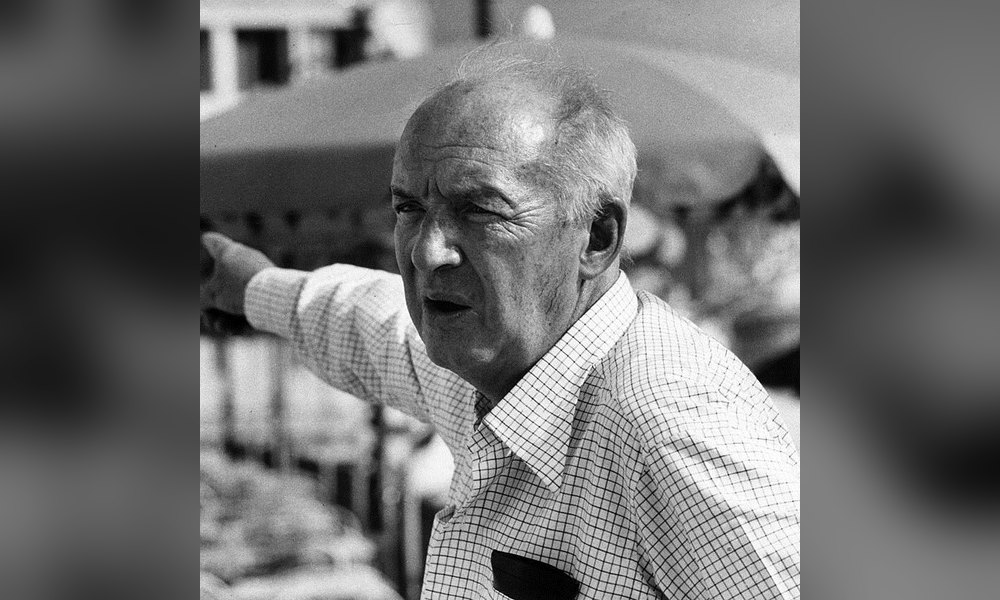
Photo: Walter Mori (Mondadori Publishers), Public domain, via Wikimedia Commons (cropped).