
Publication Order of Prairie Trilogy Books
| O Pioneers! | 1913 |
| The Song of the Lark | 1915 |
| My Ántonia | 1918 |
Publication Order of Standalone Novels
| Alexander’s Bridge | 1912 |
| One of Ours | 1922 |
| A Lost Lady | 1923 |
| The Professor’s House | 1925 |
| My Mortal Enemy | 1926 |
| Death Comes for the Archbishop | 1927 |
| Shadows on the Rock | 1931 |
| Lucy Gayheart | 1935 |
| Sapphira and the Slave Girl | 1940 |
Publication Order of Short Story Collections
| The Troll Garden | 1905 |
| Youth and the Bright Medusa | 1920 |
| Obscure Destinies | 1932 |
| The Old Beauty and Others | 1948 |
| Five Stories | 1956 |
| Early Stories of Willa Cather | 1957 |
| Willa Cather’s Collected Short Fiction, 1892-1912 | 1965 |
| Uncle Valentine and Other Stories | 1973 |
Publication Order of Poetry Collections
| April Twilights | 1903 |
| April Twilights and Other Poems | 1923 |
Publication Order of Non-Fiction Books
| Not Under Forty | 1936 |
| Willa Cather on Writing | 1949 |
| Willa Cather in Europe | 1956 |
| The Kingdom of Art | 1966 |
| The World and the Parish | 1970 |
| Willa Cather in Person | 1986 |
| The Selected Letters of Willa Cather | 2013 |
About Willa Cather
Willa Cather (1873 to 1947) was an American novelist known for her fiction about settlers and immigrants on the Great Plains, including “O Pioneers!”, “The Song of the Lark” and “My Ántonia”. She won the Pulitzer Prize in 1923 for “One of Ours”, a novel set during the First World War.
Cather was born near Winchester, Virginia, on 7 December 1873. When she was nine her family moved to Webster County, Nebraska, and later settled in the town of Red Cloud. She graduated from the University of Nebraska in 1895 with a degree in English, having already written columns for the Nebraska State Journal. She then spent ten years in Pittsburgh as a magazine editor, newspaper critic and high school teacher. Her first book was a volume of poems, “April Twilights” (1903), followed by the story collection “The Troll Garden” (1905), which contains “Paul’s Case”. In 1906 she moved to New York to join the staff of McClure’s Magazine.
McClure’s serialised her first novel, “Alexander’s Bridge” (1912), which she soon came to regard as weak. The three Plains novels that followed, sometimes called her Prairie Trilogy, made her name. The title character of “My Ántonia” (1918) was modelled on her childhood friend Annie Sadilek Pavelka, a Bohemian immigrant in Red Cloud.
In 1920 Cather left Houghton Mifflin for the young firm of Alfred A. Knopf, attracted by its reputation for backing its authors with advertising. “A Lost Lady” and “The Professor’s House” raised her standing further, and “Death Comes for the Archbishop” (1927) sold 86,500 copies in two years and was later named among the Modern Library’s 100 best novels of the twentieth century. “Shadows on the Rock” (1931), set in seventeenth-century Quebec, was the most widely read novel in the United States that year. A 1934 film of “A Lost Lady” bore little resemblance to the book, and her 1943 will prohibited any dramatisation of her works.
Her last novel was “Sapphira and the Slave Girl” (1940). In 1944 she received the gold medal for fiction from the National Institute of Arts and Letters. She died in New York on 24 April 1947 and is buried in Jaffrey, New Hampshire, beside Edith Lewis, her partner of 39 years. A final story collection, “The Old Beauty and Others”, appeared in 1948, and the manuscript of an unfinished novel set in Avignon was destroyed on her instructions.
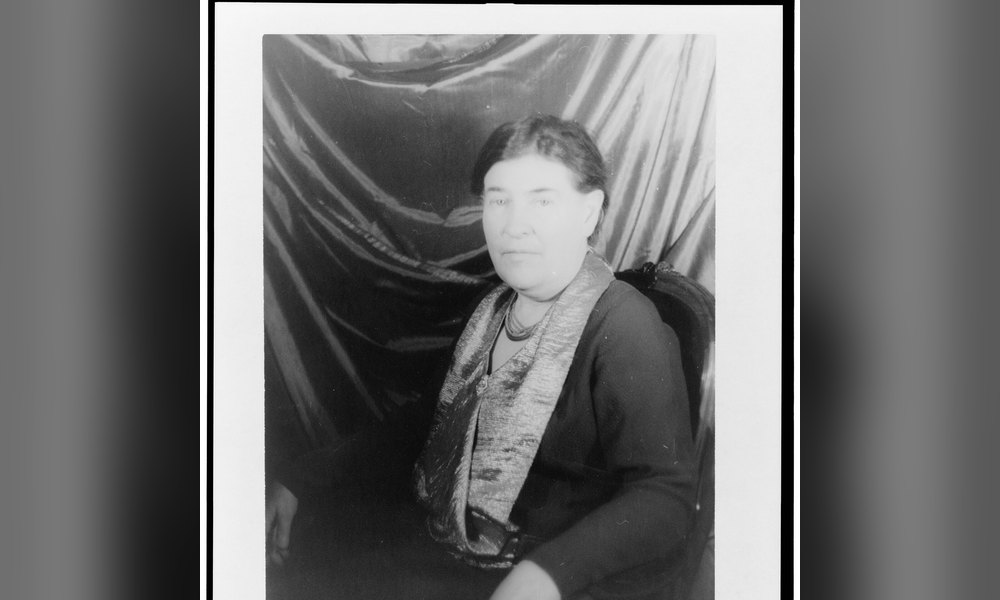
Photo: Carl Van Vechten, Library of Congress, Public domain, via Wikimedia Commons (cropped).