
Publication Order of Standalone Novels
| The Fires of Spring | 1949 |
| The Bridges at Toko-Ri | 1953 |
| Sayonara | 1953 |
| Hawaii | 1959 |
| Caravans | 1963 |
| The Source | 1965 |
| The Drifters | 1971 |
| Centennial | 1974 |
| Chesapeake | 1978 |
| The Covenant | 1980 |
| Space | 1982 |
| Poland | 1983 |
| Texas | 1985 |
| Legacy | 1987 |
| Alaska | 1988 |
| Caribbean | 1989 |
| Journey | 1989 |
| The Eagle and the Raven | 1990 |
| The Novel | 1991 |
| Mexico | 1992 |
| Recessional | 1994 |
| Miracle in Seville | 1995 |
| Matecumbe | 2007 |
Publication Order of Short Story Collections
| Tales of the South Pacific | 1947 |
| Return to Paradise | 1951 |
Publication Order of Non-Fiction Books
| The Voice of Asia | 1951 |
| The Floating World | 1954 |
| The Bridge at Andau | 1957 |
| Rascals in Paradise (With: A. Grove Day) | 1957 |
| Japanese Prints: From the Early Masters to the Modern | 1959 |
| Report of the County Chairman | 1961 |
| Iberia | 1968 |
| Presidential Lottery | 1969 |
| The Quality of Life | 1970 |
| Kent State: What Happened and Why | 1971 |
| A Michener Miscellany: 1950-1970 | 1973 |
| Sports in America | 1976 |
| Six Days in Havana (With: John Kings) | 1989 |
| Pilgrimage: A Memoir of Poland and Rome | 1990 |
| The World Is My Home | 1992 |
| My Lost Mexico | 1992 |
| James A. Michener’s Writer’s Handbook | 1992 |
| Literary Reflections | 1993 |
| This Noble Land | 1996 |
About James A. Michener
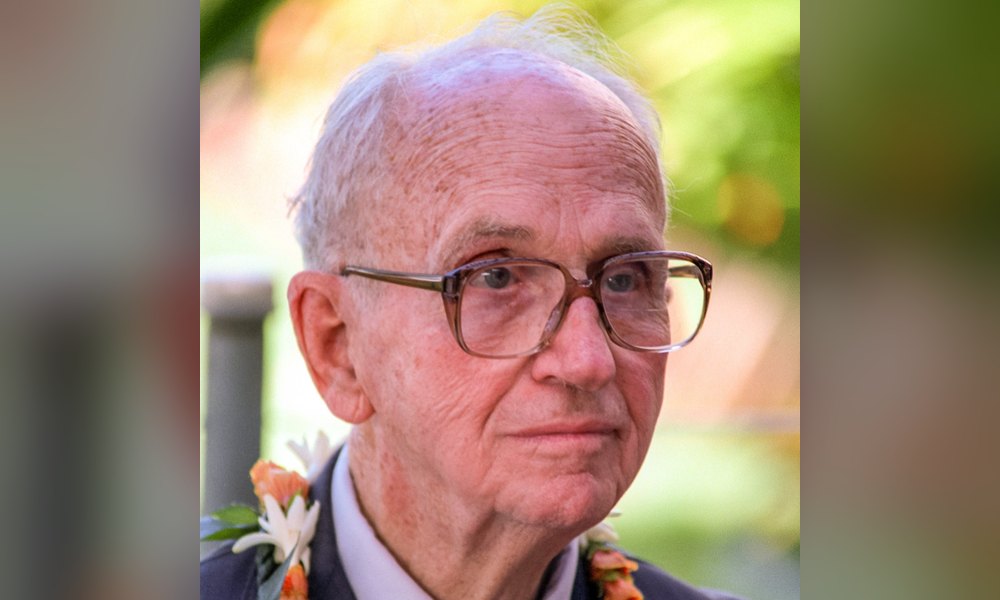
James A. Michener (born 3 February 1907, died 16 October 1997) was an American writer of more than 40 books, most of them long historical sagas that follow generations of families in a single place, among them “Hawaii”, “Centennial”, “Chesapeake” and “Texas”. His first book, “Tales of the South Pacific”, won the Pulitzer Prize for Fiction in 1948.
Michener was raised as a Quaker in Doylestown, Pennsylvania, by an adoptive mother, Mabel Michener, and later wrote that he did not know who his biological parents were. He graduated from Swarthmore College in 1929 with a degree in English and history, studied for two years at the University of St Andrews in Scotland, and worked as a schoolteacher before taking a master’s degree in education in Colorado. He then joined the publisher Macmillan as a social studies education editor.
Although a Quaker, he enlisted in the United States Navy during the Second World War and was sent to the South Pacific as a naval historian. His notes from those travels became “Tales of the South Pacific” (1947), published when he was 40. Rodgers and Hammerstein adapted it as the Broadway musical “South Pacific” in 1949, and film versions followed in 1958 and 2001.
“Hawaii” (1959), which appeared as Hawaii became the 50th state, set the pattern for his later fiction: novels built on detailed historical, cultural and geological research, several of them more than 1,000 pages long. “The Source” (1965) traces the history of Judaism, “Centennial” (1974) tells the story of Colorado and “The Covenant” (1980) that of South Africa. “Centennial” became a 12-part NBC miniseries in 1978, and there were also films of “The Bridges at Toko-Ri”, “Sayonara” and “Hawaii”, and miniseries of “Space” and “Texas”. His novels sold an estimated 75 million copies worldwide.
His non-fiction includes “Iberia”, about his travels in Spain and Portugal, “Kent State: What Happened and Why” and the memoir “The World Is My Home”. He ran unsuccessfully for Congress as a Democrat in 1962, and gave away more than $100 million to universities, museums and writing programmes, endowing the Michener Center for Writers at the University of Texas at Austin. “Recessional” (1994) was the last novel he completed. He spent his final years in Austin and died of kidney failure aged 90. “Matecumbe”, an unfinished novel, was published in 2007.
Photo: Robert Wilson, Public domain, via Wikimedia Commons (cropped).