
Publication Order of House of Earth Books
| The Good Earth | 1931 |
| Sons | 1932 |
| A House Divided | 1935 |
Publication Order of Dragon Seed Books
| Dragon Seed | 1942 |
| The Promise | 1943 |
Publication Order of Standalone Novels
| East Wind: West Wind | 1930 |
| The Mother | 1934 |
| This Proud Heart | 1938 |
| The Patriot | 1939 |
| Other Gods: An American Legend | 1940 |
| China Sky | 1941 |
| China Flight | 1945 |
| Portrait of a Marriage | 1945 |
| The Townsman (As: John Sedges) | 1945 |
| Pavilion of Women | 1946 |
| The Angry Wife (As: John Sedges) | 1947 |
| Peony / The Bondmaid | 1948 |
| Kinfolk | 1949 |
| The Long Love (As: John Sedges) | 1949 |
| God’s Men | 1951 |
| Bright Procession (As: John Sedges) | 1952 |
| The Hidden Flower | 1952 |
| Come, My Beloved | 1953 |
| Voices in the House (As: John Sedges) | 1953 |
| Imperial Woman | 1956 |
| Letter from Peking | 1957 |
| Command the Morning | 1959 |
| Satan Never Sleeps | 1962 |
| The Living Reed | 1963 |
| Death in the Castle | 1965 |
| The Time Is Noon | 1966 |
| The New Year | 1968 |
| The Three Daughters of Madame Liang | 1969 |
| Mandala: A Novel of India | 1970 |
| The Goddess Abides | 1972 |
| All Under Heaven | 1973 |
| The Rainbow | 1974 |
| The Eternal Wonder | 2013 |
Publication Order of Short Story Collections
| The First Wife and Other Stories | 1933 |
| Today and Forever: Stories of China | 1941 |
| Far and Near: Stories of Japan, China, and America | 1947 |
| Fourteen Stories | 1961 |
| Hearts Come Home and Other Stories | 1962 |
| The Good Deed and Other Stories of Asia, Past and Present | 1969 |
| Once Upon a Christmas | 1972 |
| East and West | 1975 |
| Secrets of the Heart | 1976 |
| The Lovers and Other Stories | 1977 |
| Mrs. Stoner and the Sea and Other Stories | 1978 |
| The Woman Who Was Changed and Other Stories | 1979 |
Publication Order of Children’s Books
| The Young Revolutionist | 1932 |
| Stories for Little Children | 1940 |
| The Chinese Children Next Door | 1942 |
| The Water-Buffalo Children | 1943 |
| The Dragon Fish | 1944 |
| Yu Lan: Flying Boy of China | 1945 |
| The Big Wave | 1948 |
| One Bright Day | 1950 |
| The Man Who Changed China: The Story of Sun Yat-sen | 1953 |
| The Beech Tree | 1954 |
| Johnny Jack and His Beginnings | 1954 |
| The Christmas Miniature / The Christmas Mouse | 1957 |
| The Christmas Ghost | 1960 |
| Welcome Child | 1963 |
| The Big Fight | 1964 |
| The Little Fox in the Middle | 1966 |
| Matthew, Mark, Luke and John | 1966 |
| The Chinese Storyteller | 1971 |
| A Gift for the Children | 1973 |
| Mrs. Starling’s Problem | 1973 |
Publication Order of Non-Fiction Books
| Is There a Case for Foreign Missions? | 1932 |
| The Exile | 1936 |
| Fighting Angel: Portrait of a Soul | 1936 |
| The Chinese Novel | 1939 |
| Of Men and Women | 1941 |
| American Unity and Asia / Asia and Democracy | 1942 |
| What America Means to Me | 1943 |
| Talk About Russia (With: Masha Scott) | 1945 |
| Tell the People: Talks with James Yen About the Mass Education Movement | 1945 |
| How It Happens: Talk About the German People, 1914-1933 (With: Erna von Pustau) | 1947 |
| American Argument (With: Eslanda Goode Robeson) | 1949 |
| The Child Who Never Grew | 1950 |
| My Several Worlds | 1954 |
| Friend to Friend (With: Carlos P. Romulo) | 1958 |
| A Bridge for Passing | 1962 |
| The Joy of Children | 1964 |
| Children for Adoption | 1965 |
| For Spacious Skies (With: Theodore F. Harris) | 1966 |
| The People of Japan | 1966 |
| To My Daughters, With Love | 1967 |
| The Kennedy Women | 1970 |
| China as I See It | 1970 |
| Pearl S. Buck’s America | 1971 |
| The Story Bible | 1971 |
| China Past and Present | 1972 |
| Pearl S. Buck’s Oriental Cookbook | 1972 |
About Pearl S. Buck
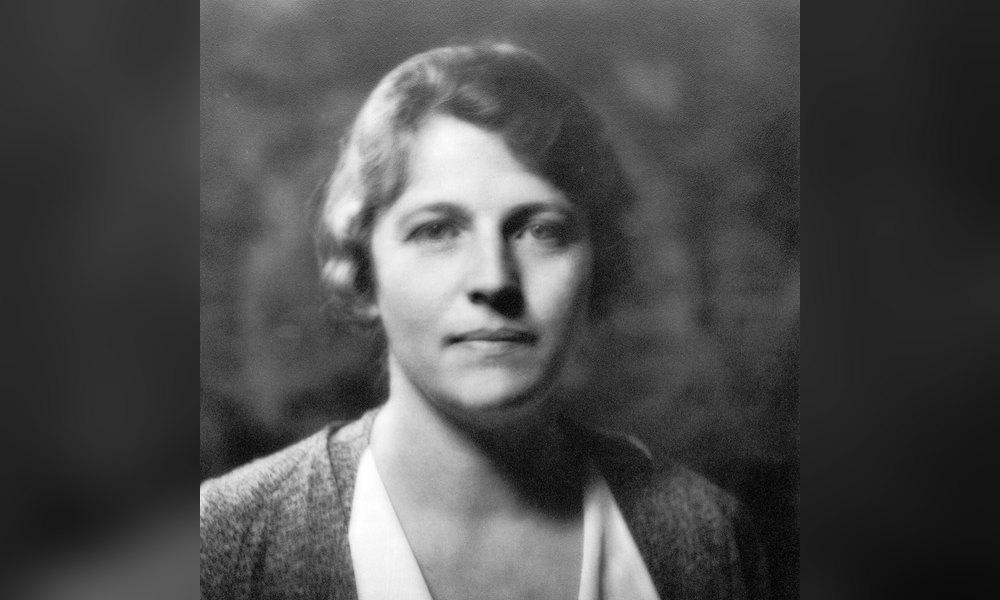
Pearl S. Buck (1892 to 1973) was an American writer and humanitarian best known for “The Good Earth”, the best-selling novel in the United States in 1931 and 1932 and winner of the Pulitzer Prize in 1932. In 1938 she became the first American woman to win the Nobel Prize in Literature.
She was born Pearl Comfort Sydenstricker in Hillsboro, West Virginia, on 26 June 1892, the daughter of Southern Presbyterian missionaries, and was taken to China at five months old. She grew up in Zhenjiang speaking both English and Chinese, then studied at Randolph-Macon Woman’s College in Virginia, graduating in 1914 before returning to China. In 1917 she married the agricultural economist John Lossing Buck. They lived first in Suzhou in Anhui province, the region she later described in “The Good Earth”, and from 1920 in Nanjing, where she taught English literature at the University of Nanking.
Her first novel, “East Wind: West Wind”, was accepted by Richard J. Walsh of the John Day Company and published in 1930. “The Good Earth” (1931), about family life in a Chinese village in the early 20th century, opened the House of Earth trilogy, which continues with “Sons” (1932) and “A House Divided” (1935). A film version was released in 1937. The Nobel citation also praised her biographies of her parents, “The Exile” and “Fighting Angel”, both published in 1936.
Buck left China in 1934. The following year she divorced, married Walsh and settled at Green Hills Farm in Bucks County, Pennsylvania. Her later fiction includes “Dragon Seed” (1942), about villagers near Nanjing during the Japanese invasion, and its sequel “The Promise”; “Pavilion of Women” (1946); “Peony” (1948), a story of the Jews of Kaifeng; “Imperial Woman” (1956), a fictionalised life of the Empress Dowager Cixi; and “The Living Reed” (1963), set in Korea. She published five novels under the pseudonym John Sedges, beginning with “The Townsman” (1945), and wrote for children, notably “The Big Wave” (1948).
She campaigned for civil rights, women’s rights and the adoption of mixed-race children. In 1949 she founded a foster home that grew into Welcome House, the first international, interracial adoption agency, and she later set up the Pearl S. Buck Foundation. She had eight children, seven of them adopted. Buck died of lung cancer in Danby, Vermont, on 6 March 1973. A late novel, “The Eternal Wonder”, was first published in 2013.
Photo: Arnold Genthe (Library of Congress), Public domain, via Wikimedia Commons (cropped).