
Publication Order of Nathan Zuckerman Books
| The Ghost Writer | 1979 |
| Zuckerman Unbound | 1981 |
| The Anatomy Lesson | 1983 |
| The Prague Orgy | 1985 |
| The Counterlife | 1986 |
| American Pastoral | 1997 |
| I Married a Communist | 1998 |
| The Human Stain | 2000 |
| Exit Ghost | 2007 |
Publication Order of David Kepesh Books
| The Breast | 1972 |
| The Professor of Desire | 1977 |
| The Dying Animal | 2001 |
Publication Order of Roth Books
| The Facts: A Novelist’s Autobiography | 1988 |
| Deception | 1990 |
| Patrimony: A True Story | 1991 |
| Operation Shylock: A Confession | 1993 |
| The Plot Against America | 2004 |
Publication Order of Nemeses Books
| Everyman | 2006 |
| Indignation | 2008 |
| The Humbling | 2009 |
| Nemesis | 2010 |
Publication Order of Standalone Novels
| Letting Go | 1962 |
| When She Was Good | 1967 |
| Portnoy’s Complaint | 1969 |
| Our Gang | 1971 |
| The Great American Novel | 1973 |
| My Life as a Man | 1974 |
| Sabbath’s Theater | 1995 |
Publication Order of Short Story Collections
| Goodbye, Columbus and Five Short Stories | 1959 |
Publication Order of Non-Fiction Books
| Reading Myself and Others | 1975 |
| Shop Talk | 2001 |
| Why Write?: Collected Nonfiction 1960-2013 | 2017 |
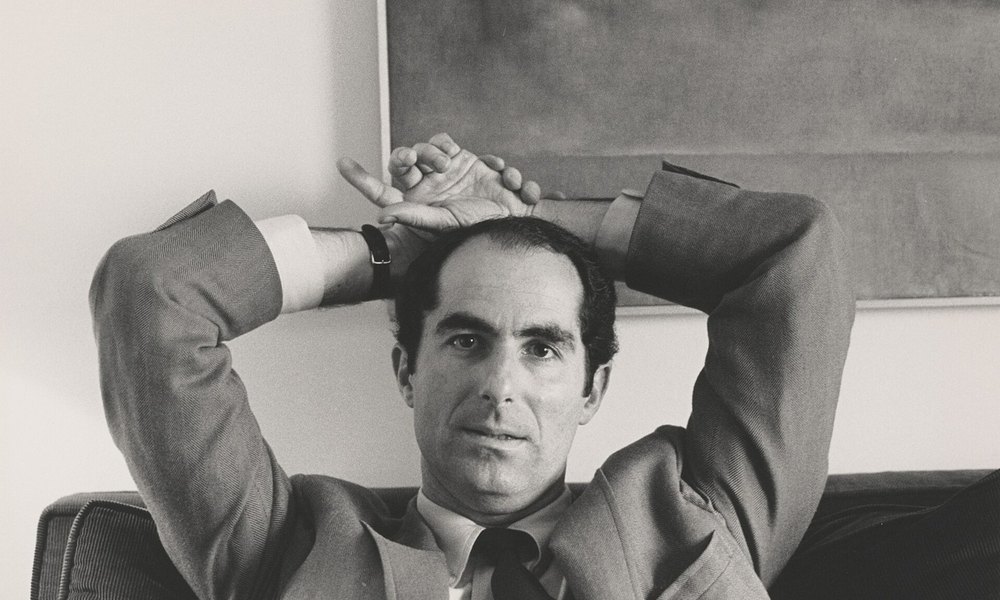
About Philip Roth
Philip Roth (1933 to 2018) was an American novelist and short-story writer whose fiction, often set in his birthplace of Newark, New Jersey, is known for its autobiographical character and its explorations of Jewish and American identity. He won the Pulitzer Prize for “American Pastoral” and the National Book Award twice.
Roth was born in Newark on 19 March 1933, the second child of Bess and Herman Roth, an insurance broker, and graduated from Weequahic High School. He took a BA in English at Bucknell University and an MA in English literature at the University of Chicago in 1955. He enlisted in the army that year but was given a medical discharge after a back injury in basic training. He later taught comparative literature at the University of Pennsylvania until he retired from teaching in 1991.
His first book, “Goodbye, Columbus” (1959), a novella published with short stories, won the National Book Award in 1960. His fourth novel, “Portnoy’s Complaint” (1969), was a bestseller and brought him wide commercial and critical success.
By the end of the 1970s Roth had created his alter ego, the novelist Nathan Zuckerman, who narrates or appears in nine books from “The Ghost Writer” (1979) to “Exit Ghost” (2007). Three of them form the American Trilogy: “American Pastoral”, “I Married a Communist” and “The Human Stain”. Literature professor David Kepesh is the protagonist of three further books, and a fictionalised Philip Roth narrates others, including “The Plot Against America” (2004), an alternate history in which Charles Lindbergh is elected president in 1940. His last four short novels are grouped as “Nemeses”.
Roth also won the National Book Critics Circle Award for “The Counterlife”, a second National Book Award for “Sabbath’s Theater”, and the PEN/Faulkner Award three times, for “Operation Shylock”, “The Human Stain” and “Everyman”. In 2005 the Library of America began publishing his complete works. Screen adaptations include the films “Goodbye, Columbus” (1969), “The Human Stain” (2003), “Elegy” (2008, from “The Dying Animal”), “American Pastoral” and “Indignation” (both 2016), and the 2020 miniseries “The Plot Against America”.
His final novel, “Nemesis”, appeared in 2010, and in 2012 he announced that he had retired from writing fiction. Roth died of heart failure in Manhattan on 22 May 2018, aged 85.
Photo: Bernard Gotfryd / Library of Congress, Public domain, via Wikimedia Commons (cropped).