
Publication Order of The Thing of It Is Books
| The Thing of It Is... | 1967 |
| Father’s Day | 1971 |
Publication Order of Babe Levy Books
| Marathon Man | 1974 |
| Brothers | 1986 |
Publication Order of Standalone Novels
| The Temple of Gold | 1957 |
| Your Turn to Curtsy, My Turn to Bow | 1958 |
| Soldier in the Rain | 1960 |
| Boys and Girls Together | 1964 |
| No Way to Treat a Lady | 1964 |
| The Princess Bride | 1973 |
| Magic | 1976 |
| Tinsel | 1979 |
| Control | 1982 |
| The Silent Gondoliers | 1983 |
| The Color of Light | 1984 |
| Heat / Edged Weapons | 1985 |
Publication Order of Children’s Books
| Wigger | 1974 |
Publication Order of Non-Fiction Books
| The Season: A Candid Look at Broadway | 1969 |
| The Story of A Bridge Too Far | 1977 |
| Adventures in the Screen Trade | 1983 |
| Wait Till Next Year (With: Mike Lupica) | 1988 |
| Hype and Glory | 1990 |
| Which Lie Did I Tell? | 2000 |
| The Big Picture: Who Killed Hollywood? and Other Essays | 2000 |
About William Goldman
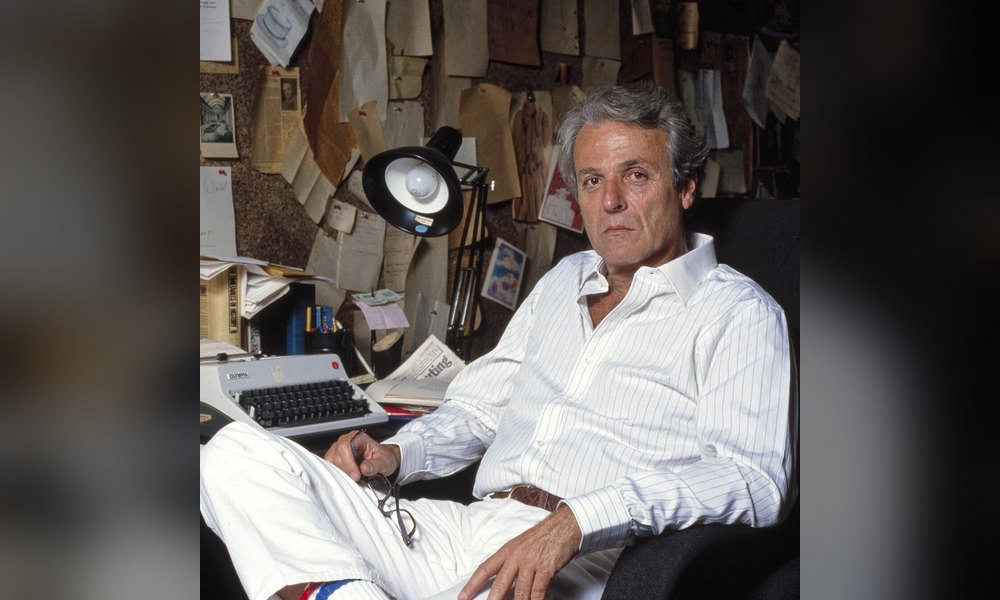
William Goldman (1931 to 2018) was an American novelist and screenwriter, the author of “The Princess Bride”, “Marathon Man” and “Magic”. He wrote 16 novels and won Academy Awards for his screenplays for “Butch Cassidy and the Sundance Kid” and “All the President’s Men”.
Goldman was born in Chicago on 12 August 1931 and grew up in Highland Park, Illinois. He began writing at Oberlin College, graduated in 1952 and was drafted into the Army, where he served as a clerk at the Pentagon until 1954. He then took a master’s degree at Columbia University, finishing in 1956. That summer he wrote his first novel, “The Temple of Gold” (1957), in less than three weeks. “Your Turn to Curtsy, My Turn to Bow” (1958) and “Soldier in the Rain” (1960), which drew on his military service and was filmed in 1963, followed.
“No Way to Treat a Lady” (1964), written in two weeks while he was blocked on the longer “Boys and Girls Together”, was first published under the pseudonym Harry Longbaugh. It led to film work, and “Butch Cassidy and the Sundance Kid” (1969), his first original screenplay, sold for a then record $400,000. He kept writing novels alongside the scripts: “The Thing of It Is...” (1967) and its sequel “Father’s Day” (1971), then “The Princess Bride” (1973), a fantasy presented as his abridgement of a longer book by the fictional S. Morgenstern. “The Silent Gondoliers” (1983) appeared under the Morgenstern name.
From the mid 1970s his fiction moved in a more commercial direction. The thriller “Marathon Man” (1974) was sold as part of a three-book deal and was followed by “Magic” (1976); Goldman wrote the screenplays for the film versions of both, and returned to the first in the sequel “Brothers” (1986), his final novel. “Heat” (1985), published in Britain as “Edged Weapons”, was filmed in 1986 and again in 2015 as “Wild Card”. Rob Reiner’s film of “The Princess Bride”, from Goldman’s own script, was released in 1987.
His non-fiction includes “The Season” (1969), a study of Broadway, and two memoirs of Hollywood, “Adventures in the Screen Trade” (1983) and “Which Lie Did I Tell?” (2000). He also won two Edgar Awards for screenplays and the Writers Guild of America’s Laurel Award in 1985. Goldman died in Manhattan on 16 November 2018, aged 87.
Photo: Bernard Gotfryd / Library of Congress, Public domain, via Wikimedia Commons (cropped).