Foundation and Empire / The Man Who Upset the Universe
1952
Second Foundation
1953
Foundation’s Edge
1982
Foundation and Earth
1986
Prelude to Foundation
1988
Forward the Foundation
1993
Publication Order of Lucky Starr Books
David Starr, Space Ranger
1952
Lucky Starr and the Pirates of the Asteroids
1953
Lucky Starr and the Oceans of Venus
1954
Lucky Starr and the Big Sun of Mercury
1956
Lucky Starr and the Moons of Jupiter
1957
Lucky Starr and the Rings of Saturn
1958
Publication Order of Norby Books
Norby, the Mixed-Up Robot (With: Janet Asimov)
1983
Norby’s Other Secret (With: Janet Asimov)
1984
Norby and the Lost Princess (With: Janet Asimov)
1985
Norby and the Invaders (With: Janet Asimov)
1985
Norby and the Queen’s Necklace (With: Janet Asimov)
1986
Norby Finds a Villain (With: Janet Asimov)
1987
Norby Down to Earth (With: Janet Asimov)
1988
Norby and Yobo’s Great Adventure (With: Janet Asimov)
1989
Norby and the Oldest Dragon (With: Janet Asimov)
1990
Norby and the Court Jester (With: Janet Asimov)
1991
Publication Order of Black Widowers Books
Tales of the Black Widowers
1974
More Tales of the Black Widowers
1976
Casebook of the Black Widowers
1980
Banquets of the Black Widowers
1984
Puzzles of the Black Widowers
1990
The Return of the Black Widowers
2003
Publication Order of Standalone Novels
The End of Eternity
1955
The Death Dealers / A Whiff of Death
1958
Fantastic Voyage
1966
The Gods Themselves
1972
Murder at the ABA / Authorized Murder
1976
Fantastic Voyage II: Destination Brain
1987
Nemesis
1989
Nightfall (With: Robert Silverberg)
1990
The Ugly Little Boy / Child of Time (With: Robert Silverberg)
1992
The Positronic Man (With: Robert Silverberg)
1992
Publication Order of Short Story Collections
The Martian Way and Other Stories
1955
Earth Is Room Enough
1957
Nine Tomorrows
1959
Through a Glass, Clearly
1967
Asimov’s Mysteries
1968
Nightfall and Other Stories
1969
The Early Asimov
1972
The Best of Isaac Asimov
1973
Have You Seen These?
1974
Buy Jupiter and Other Stories
1975
The Bicentennial Man and Other Stories
1976
The Key Word and Other Mysteries
1977
Three by Asimov
1981
The Winds of Change and Other Stories
1983
The Union Club Mysteries
1983
The Edge of Tomorrow
1985
The Disappearing Man and Other Mysteries
1985
The Alternate Asimovs
1986
The Best Science Fiction of Isaac Asimov
1986
The Best Mysteries of Isaac Asimov
1986
Azazel
1988
The Asimov Chronicles: Fifty Years of Isaac Asimov
1989
The Complete Stories, Volume 1
1990
The Complete Stories, Volume 2
1992
Gold: The Final Science Fiction Collection
1995
Magic: The Final Fantasy Collection
1996
Publication Order of Children’s Books
The Best New Thing
1971
The Heavenly Host
1975
Publication Order of Non-Fiction Books
The Chemicals of Life
1954
Inside the Atom
1956
Only a Trillion
1957
The Intelligent Man’s Guide to Science
1960
Asimov’s Biographical Encyclopedia of Science and Technology
1964
The Universe: From Flat Earth to Quasar
1966
Understanding Physics
1966
Asimov’s Guide to the Bible
1968
Opus 100
1969
Asimov’s Guide to Shakespeare
1970
Isaac Asimov’s Treasury of Humor
1971
Opus 200
1979
In Memory Yet Green
1979
Extraterrestrial Civilizations
1979
A Choice of Catastrophes
1979
In Joy Still Felt
1980
Asimov on Science Fiction
1981
Opus 300
1984
Asimov’s Chronology of Science and Discovery
1989
Asimov’s Chronology of the World
1991
I. Asimov: A Memoir
1994
Yours, Isaac Asimov
1995
About Isaac Asimov
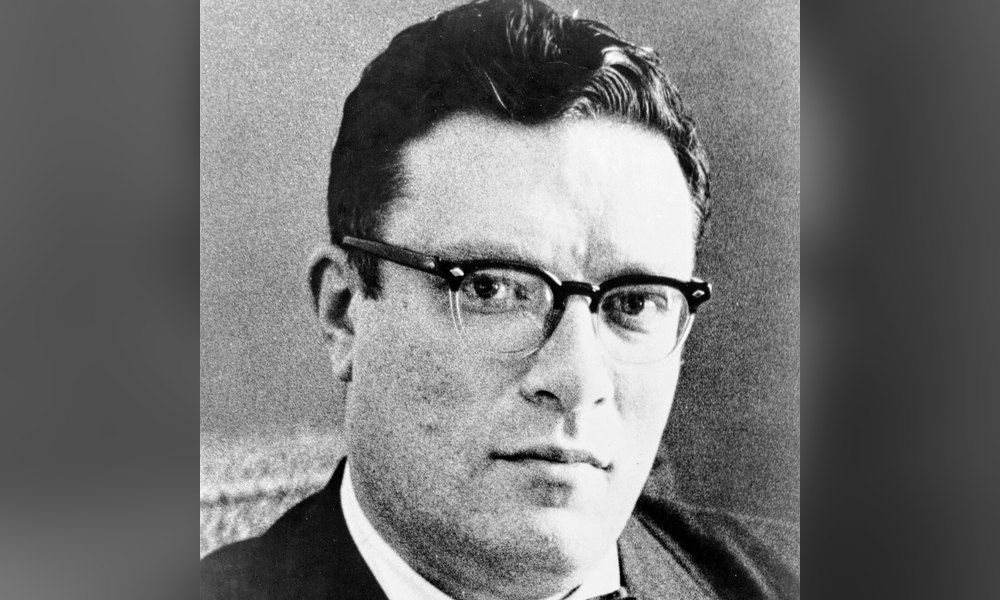
Isaac Asimov (about 1920 to 1992) was an American writer and professor of biochemistry at Boston University, regarded in his lifetime as one of the “Big Three” science fiction writers alongside Robert A. Heinlein and Arthur C. Clarke. He wrote or edited more than 500 books, among them the “Foundation” and “Robot” series, as well as mysteries, popular science and history.
Asimov was born in Petrovichi, Russia, to a Jewish family who emigrated to the United States in 1923, when he was three. He grew up in Brooklyn, where his parents ran a succession of candy stores, and he first read science fiction in the pulp magazines they sold. He took a degree at Columbia University in 1939, a master’s in chemistry in 1941 and a doctorate in 1948, working as a civilian chemist at the Philadelphia Navy Yard during the war. He joined the Boston University School of Medicine in 1949.
His first published story, “Marooned Off Vesta”, appeared in Amazing Stories in March 1939. “Nightfall” (1941) made his name, and the Science Fiction Writers of America later voted it the best science fiction short story ever written. His first novel, “Pebble in the Sky”, and the robot collection “I, Robot” both appeared in 1950.
The “Foundation” books follow the fall of a galactic empire, and the first three won a one-off Hugo Award for Best All-Time Series in 1966. The “Robot” novels, beginning with “The Caves of Steel” (1954), are science fiction detective stories featuring Elijah Baley, and the robot stories introduced the Three Laws of Robotics. The Oxford English Dictionary credits Asimov with the word “robotics”. The three “Galactic Empire” novels are set earlier in the same future as “Foundation”. As Paul French he wrote the “Lucky Starr” novels for younger readers.
After 1958 Asimov turned mainly to non-fiction, writing only four science fiction novels in the next quarter of a century. He returned to the form with “Foundation’s Edge” (1982) and then wrote sequels and prequels that joined the Robot, Empire and Foundation books into a single future history. He also wrote the “Black Widowers” mystery stories and, with his wife Janet Asimov, the “Norby” books for children.
Asimov died in Manhattan on 6 April 1992. “Forward the Foundation” was published the following year. Screen versions of his work include the films “Bicentennial Man” (1999) and “I, Robot” (2004) and the television series “Foundation”, which began in 2021.